

Glass Fiber Reinforced Plastic Market to Reach USD 126.5 Billion by 2035 as Wind Energy and Electrification Drive Growth
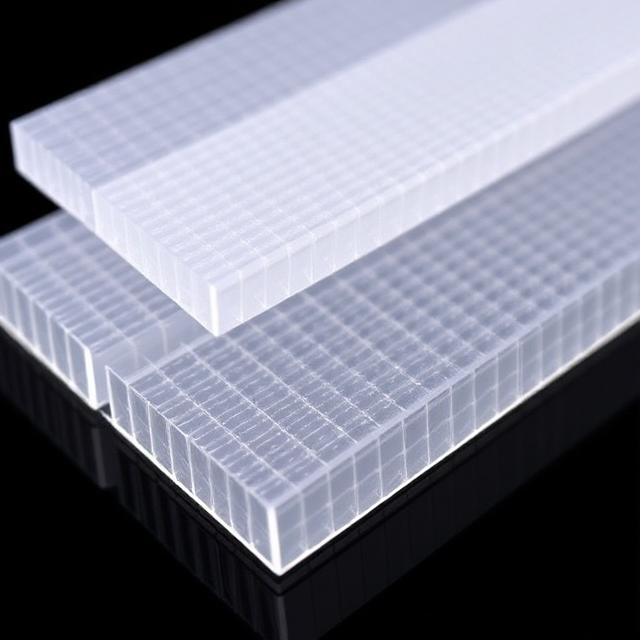
Glass Fiber Reinforced Plastic GFRP Market
Asia-Pacific Glass Fiber Reinforced Plastic Market is dominant and accounts for over 45.1% of worldwide revenue in 2025
EUROPE, UNITED KINGDOM, July 13, 2026 /EINPresswire.com/ -- Glass fiber reinforced plastic—once dismissed as a poor man's carbon fiber—has emerged as one of the most strategically important materials of the energy transition. It does not boast the elite performance credentials of carbon fiber composites, but it delivers something equally valuable: the strength-to-weight ratio, corrosion resistance, and manufacturing scalability required to build wind turbines, electric vehicles, and resilient infrastructure at a cost that steel and aluminum cannot match. According to a comprehensive report by Market Research Future (MRFR), the global glass fiber reinforced plastic (GFRP) market reached an estimated USD 76.20 billion in 2025 and is projected to climb from USD 79.85 billion in 2026 to USD 126.53 billion by 2035, registering a compound annual growth rate of 5.25%. This trajectory reflects sustained capital allocation toward renewable-energy infrastructure, automotive electrification mandates, and government-backed infrastructure modernization programs that collectively channel over USD 120 billion in green incentives across the EU, China, and the United States.The Wind Energy Imperative: Blades That Move Mountains
The single largest volume catalyst for the GFRP market is the global expansion of wind energy capacity. The Global Wind Energy Council projects cumulative offshore-wind installations will surpass 380 GW by 2032, requiring turbine blades that can exceed 100 meters in length. Glass fiber reinforcements remain the blade material of choice for turbines in the 8–15 MW class because they balance stiffness, fatigue life, and cost far more effectively than carbon fiber at these scales. Each gigawatt of installed offshore capacity consumes an estimated 10,000–12,000 metric tons of glass fiber, making this application a structural demand driver rather than a cyclical one.
The European Union's revised Renewable Energy Directive targets 60 GW of offshore capacity by 2030, while China added 7.2 GW in 2024 alone. Each 15 MW offshore turbine contains approximately 35–40 metric tons of glass fiber, and the global pipeline of projects under development exceeds 250 GW through 2035. The wind energy end-user segment is the fastest-growing in the GFRP market at a 5.58% CAGR, reflecting not merely capacity additions but the scaling of individual turbine sizes that demand proportionally more composite material per megawatt.
Siemens Gamesa's RecyclableBlade technology, unveiled in September 2023, addresses the end-of-life challenge that has shadowed the industry's growth. Using a novel resin chemistry that allows glass fibers to be separated and reused, the first commercial blades were installed at Germany's Kaskasi offshore project. This innovation signals a path toward circularity that could sustain social license for continued GFRP deployment at scale.
Get Report Sample Copy with TOC: https://www.marketresearchfuture.com/sample_request/5004
Automotive Lightweighting: The EV Range Equation
The second major demand pillar is automotive electrification. Euro 7 emission standards and the U.S. EPA's finalized 2027–2032 tailpipe rules require fleet-average CO₂ reductions of 40–50% relative to 2022 baselines. GFRP body panels, underbody shields, and battery enclosures deliver 25–35% weight savings over stamped steel at competitive tooling costs. OEMs including Volkswagen, GM, and Hyundai have publicly committed to increasing GFRP content per vehicle by 15–20 kg between 2025 and 2030, translating into roughly USD 3.8 billion in incremental annual demand.
The electrification supercycle extends beyond lightweighting. Battery-electric and fuel-cell vehicles demand non-conductive, lightweight enclosures that insulate high-voltage battery packs from road debris and thermal events. GFRP's dielectric properties and crash-energy absorption make it the preferred material for EV underbody shields, battery-box covers, and charging-infrastructure housings. BloombergNEF forecasts global EV sales will exceed 40 million units per year by 2030, creating a structural tailwind that persists through the forecast horizon.
Thermoplastic GFRP is emerging as a game-changer for high-volume automotive production. BMW and Toyota have both piloted thermoplastic GFRP seat structures and front-end carriers, with commercial rollout expected by 2027. Thermoplastic matrices—particularly polypropylene and polyamide reinforced with long glass fibers—enable cycle times under 60 seconds, making them compatible with automotive takt-time requirements. This shift could unlock an incremental USD 4–6 billion addressable market by 2032.
Infrastructure Modernization: Corrosion-Resistant Rebar and Beyond
Government infrastructure programs are creating a synchronized demand pulse that underpins near-term volume growth. The U.S. Bipartisan Infrastructure Law allocates USD 110 billion to roads, bridges, and water systems, with corrosion-resistant GFRP rebar and bridge decks eligible under durability-performance specifications. India's National Infrastructure Pipeline earmarks USD 1.4 trillion through 2025, while China's "New Infrastructure" initiative channels public investment into 5G towers, data centers, and high-speed rail—all consuming pultruded GFRP profiles.
GFRP rebar costs 20–30% more upfront than steel but eliminates corrosion-related maintenance, cutting 75-year lifecycle costs by roughly 15–25% on chloride-exposed structures. Agencies in the U.S. and Canada increasingly specify it for coastal and salt-belt bridges. The Indian Ministry of Road Transport approved GFRP rebar under IRC specifications for bridge decks and highway barriers in April 2023, opening the Indian market to large-scale composite-rebar procurement for the first time.
Construction and infrastructure commanded the largest end-user share at 33.9% in 2025, underpinned by corrosion-resistant rebar, cladding, and gratings. This segment benefits from the sheer scale of global infrastructure investment and the non-discretionary nature of corrosion protection in aggressive environments.
Hydrogen and the Next Energy Frontier
The hydrogen economy is generating a new application frontier for the GFRP market. The EU Hydrogen Strategy and the U.S. Regional Clean Hydrogen Hubs program together mobilize over USD 20 billion in public funding for hydrogen production, transport, and end-use equipment. Type IV pressure vessels rated at 700 bar rely on filament-wound glass-epoxy shells, and hydrogen pipeline liners increasingly specify vinyl-ester GFRP for chemical resistance.
National hydrogen roadmaps in the EU, Japan, and South Korea target cumulative electrolyzer capacity of 100+ GW by 2030. Filament-wound GFRP overwraps for Type IV vessels represent a fast-growing niche, with per-vessel glass-fiber content averaging 40–60 kg. As fuel-cell trucks and hydrogen refueling stations proliferate, vessel demand could quadruple between 2026 and 2033. Although commercial-scale deployment is still ramping, this driver is expected to add measurable volume from the late 2020s onward.
Purchase Now: https://www.marketresearchfuture.com/checkout?currency=one_user-USD&report_id=5004
Material and Process Dynamics
Polyester resin held 57.2% of the GFRP market in 2025, driven by cost-effective construction and marine applications. It remains the workhorse resin for hand lay-up and spray-up processes where material cost per square meter drives purchase decisions. However, epoxy resin is the fastest-growing resin type at a 5.42% CAGR, propelled by demand in aerospace spars and hydrogen-storage applications where fatigue resistance and thermal stability justify the two-to-three-times price premium over polyester systems.
Compression molding accounted for 28.6% of the market in 2025, serving as the backbone process for automotive and electrical enclosure manufacturing. It delivers near-net-shape parts with consistent fiber distribution—critical for automotive fenders, hoods, and electrical enclosures. Injection molding is the fastest-growing process at a 5.32% CAGR, benefiting from faster cycle times and high-volume automotive production. Automated compression-molding and continuous-pultrusion lines have reduced cycle times by 30–40% since 2021, helping producers counter margin pressure.
Rovings hold the largest share by fiber form at 37.8%, consumed primarily in pultrusion lines and filament-winding machines that produce pipes, tanks, and structural profiles. Continuous filament mats are the fastest-growing fiber form at a 5.48% CAGR, as resin-transfer-molding and vacuum-infusion processes demand uniform permeability and wet-out speed.
Regional Dynamics: Asia-Pacific Dominates, All Regions Expand
Asia-Pacific commands 45.1% of the GFRP market, the largest regional share, and leads all regions with a projected 5.34% CAGR. China alone represents nearly half of Asia-Pacific consumption at USD 18.45 billion, backed by vertically integrated producers such as Jushi Group and CPIC that supply both domestic construction and export markets. Jushi Group commissioned a 200,000-metric-ton production line in Tongxiang in November 2024, making it the world's single-largest glass-fiber manufacturing site and reinforcing cost-leadership positioning.
India is the fastest-growing country opportunity at a 5.62% CAGR, powered by the National Infrastructure Pipeline and the Production Linked Incentive scheme for advanced chemistry cells, catalyzing new GFRP fabrication capacity in Gujarat and Tamil Nadu. Japan contributes USD 4.28 billion through automotive and electronics enclosures, while South Korea's 5.30% CAGR reflects hydrogen fuel-cell vehicles and shipbuilding demand.
North America holds 23.8% of global share, with the United States growing at a 5.18% CAGR. The Bipartisan Infrastructure Law and Department of Defense specifications that increasingly accept GFRP shelters, antenna radomes, and vehicle armor sustain demand. Canada's oil-sands pipeline liners and bridge rehabilitation contribute USD 3.12 billion, while Mexico's automotive nearshoring trend has attracted GFRP-component plants from Tier-1 suppliers.
Europe accounts for 22.1%, anchored by Germany's USD 5.82 billion market through automotive OEMs and wind-blade manufacturing. The UK's Contracts for Difference auction rounds have secured over 25 GW of offshore-wind pipeline, ensuring sustained blade-grade demand. France's nuclear fleet refurbishment specifies GFRP liners and cable trays for radiation and chemical resistance, while the Nordic countries' offshore-wind build-out sustains a 5.15% CAGR.
South America and the Middle East & Africa are smaller but growing markets. Brazil dominates South America at USD 2.48 billion through pre-salt offshore oil fields consuming GFRP flowlines and gratings. Saudi Arabia's NEOM gigaproject and nationwide desalination expansion underpin USD 0.92 billion in MEA demand, with GFRP pipes specified for reverse-osmosis intake and brine-discharge lines.
Read More: https://www.marketresearchfuture.com/reports/glass-fiber-reinforced-plastic-gfrp-market-5004
Headwinds: Carbon Fiber Competition, Recycling, and Styrene Regulation
The GFRP market faces meaningful challenges. Carbon-fiber price deflation—large-tow prices have declined roughly 18% since 2021 as new capacity came online in China, Turkey, and Saudi Arabia—narrows the cost gap in applications where stiffness-to-weight ratio trumps cost. While carbon fiber remains two to four times more expensive per kilogram, continued capacity expansion could erode glass fiber's advantage in mid-tier automotive and industrial segments.
Recycling and end-of-life disposal represent a structural constraint. Thermoset GFRP cannot be remelted, and landfill bans on composite waste are tightening across the EU under the revised Waste Framework Directive. The European Composites Industry Association estimates that the continent generates over 300,000 metric tons of composite waste annually. Mechanical grinding, pyrolysis, and cement-kiln co-processing exist as disposal pathways, but none yet operate at scale with positive economics. The European Commission's updated End-of-Life Vehicle Regulation, published in June 2024, requires 25% recycled content in composite vehicle components by 2035, pressuring OEMs to source from certified circular supply chains.
Occupational health regulations on styrene—the primary cross-linking monomer in polyester and vinyl-ester resins—are tightening. The EU's REACH program classified styrene as a Category 1B carcinogen in 2023, while OSHA in the United States is reviewing an 8-hour permissible exposure limit reduction from 100 ppm to 20 ppm. Compliance requires closed-mold processes and vapor-extraction systems that raise capital expenditure by 10–15% for small and mid-size fabricators.
Emerging Opportunities: Thermoplastics, Modular Housing, and Digital Twins
Several transformative trends are poised to reshape the GFRP market. Thermoplastic GFRP for high-volume automotive molding could unlock an incremental USD 4–6 billion addressable market by 2032, as sub-60-second cycle times make composites compatible with mass-production takt times.
Modular GFRP housing in emerging markets addresses a cumulative housing deficit exceeding 100 million units in Sub-Saharan Africa and South Asia. Prefabricated GFRP wall panels and roofing systems resist termites, humidity, and seismic loads while cutting construction timelines by 50% versus masonry. Pilot programs in Kenya and Bangladesh have demonstrated per-unit cost reductions of 20–25%.
Composite recycling as a service is emerging as a commercial model. Start-ups including Continuum (Denmark) and Mitsubishi Chemical Advanced Materials are commercializing pyrolysis and solvolysis plants that recover glass fibers at 80–90% of virgin mechanical properties. A fee-based recycling-as-a-service model could convert a regulatory liability into a revenue stream, especially in Europe where extended-producer-responsibility rules are intensifying.
Data-driven quality monitoring and digital twins are adding a software layer to the materials business. Embedding fiber-optic sensors within GFRP laminates enables real-time structural health monitoring of bridges, wind-turbine blades, and chemical-storage tanks. Pairing sensor data with digital-twin platforms allows asset owners to shift from scheduled to predictive maintenance, reducing lifecycle costs by an estimated 15–20%.
Drone and UAV structures represent a high-growth adjacency. Urban air mobility, agricultural drones, and defense unmanned systems rely heavily on glass-fiber airframes that balance cost, weight, and impact resistance. The drone market is projected to exceed USD 90 billion by 2035, with composite airframes representing 30–40% of platform material cost.
Competitive Landscape
The GFRP market exhibits medium concentration, with the top five manufacturers projected to contribute 35–42% of worldwide revenue and a Herfindahl-Hirschman Index between 800 and 1,200. Competition centers on fiber quality consistency, resin compatibility certification, geographic supply-chain proximity, and increasingly on sustainability credentials including recycled content and Scope 3 emissions.
Owens Corning leads with an estimated 9–12% revenue share, distinguished by vertical integration from glass melting to composite solutions and global leadership in roofing and building materials. Jushi Group captures 8–11% as the largest China-based producer, achieving cost leadership through scale with its 200,000-metric-ton Tongxiang line. CPIC holds 5–7% through export-oriented aggressive capacity expansion, while PPG Industries leverages technology-driven aerospace and automotive presence at 4–6%. Nippon Electric Glass focuses on premium quality in Japan and Southeast Asia at 3–5%, and Saint-Gobain diversifies across reinforcement textiles and building materials at 3–5%.
3B-The Fibreglass Company launched HiPer-tex W2020 high-modulus roving in July 2023, designed specifically for spar caps in offshore wind blades exceeding 100 meters—a product that exemplifies the industry's migration toward higher-performance glass fiber variants for demanding applications.
Related Report
Solar Control Window Films Market https://www.marketresearchfuture.com/reports/solar-control-window-films-market-5789
Perlite Market https://www.marketresearchfuture.com/reports/perlite-market-6718
Gas Separation Membrane Market https://www.marketresearchfuture.com/reports/gas-separation-membrane-market-7193
Polymer Fillers Market https://www.marketresearchfuture.com/reports/polymer-filler-market-1558
Market Research Future
Market Research Future
+1 855-661-4441
email us here
Legal Disclaimer:
EIN Presswire provides this news content "as is" without warranty of any kind. We do not accept any responsibility or liability for the accuracy, content, images, videos, licenses, completeness, legality, or reliability of the information contained in this article. If you have any complaints or copyright issues related to this article, kindly contact the author above.
